






The first hours after a misdemeanor arrest feel rushed, but the steps to release follow a clear order: booking, bail set, bond posted, release. If someone you love is sitting in jail right now, you probably want to know what to do and how fast.
A misdemeanor sounds minor, yet it still carries real jail time, and the defendant stays locked up until bail is handled. Dennis Blackwell Bail Bonds can help you understand the process after an arrest, so you can make clear choices while the clock runs.
Gather the defendant’s full name, booking number and jail location before you call anyone.
Key Takeaways
- A bond is a promise to the court that the defendant will return for every hearing.
- Most first-time misdemeanor bail amounts in the Colorado area fall between $500 and $5,000.
- Personal recognizance is the only form of bail with no money due.
- A co-signer owes the money if the defendant misses court.
- Missing court can bring a new criminal charge, and sometimes a felony.
How Misdemeanor Bail Bonds Work After an Arrest
A bond for a misdemeanor is a promise to the court, backed by a bail bond company, that the defendant will return for every hearing. The company files a financial guarantee so the defendant can leave jail until the case ends. In Colorado, a bail bond company posts the full bail amount for a fee, so you pay only a fraction of it.
The order of events is steady. First comes booking, when the jail records the defendant. Next, bail is set, usually by a magistrate at the first appearance within 48 hours of arrest. Then you contact the company, sign paperwork and pay. The company files the bond, and the jail releases the defendant.
Every step toward release depends on one promise: the defendant comes back for each court date.
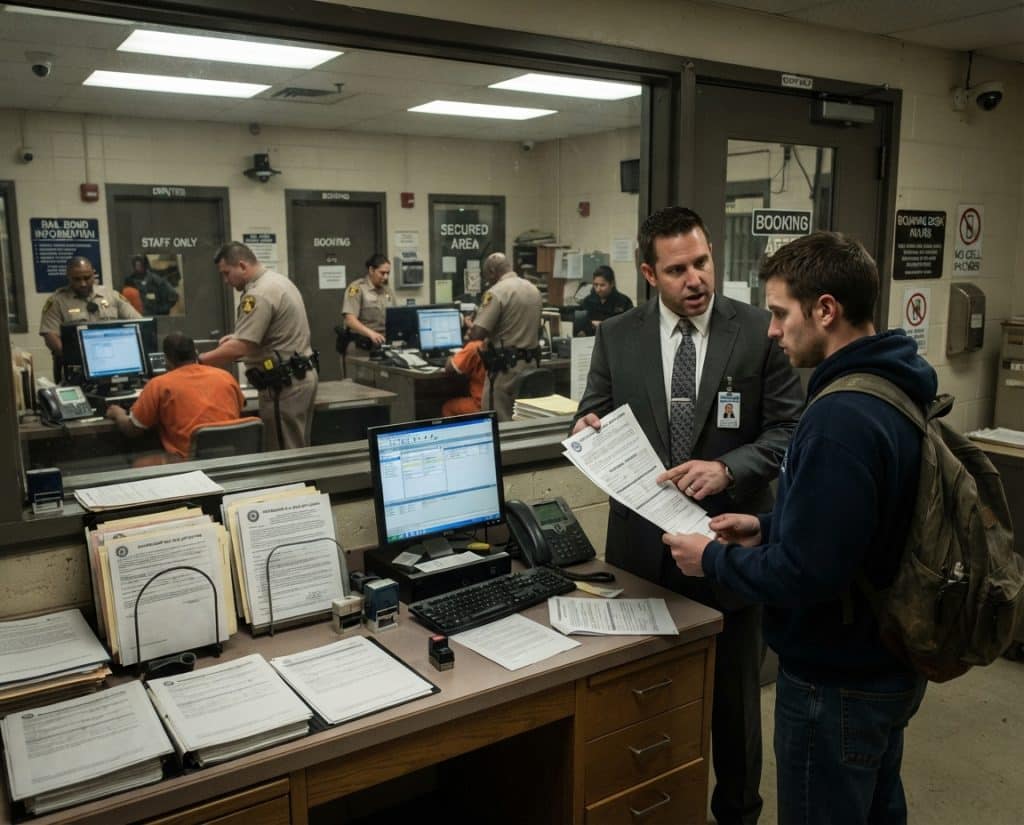
There is one exception. A few low-level charges allow release without any payment at all, so ask the jail whether the charge qualifies before you spend money.
The bondsman handles the filing with the court, and your job is to supply accurate details and sign. Mistakes in a name or booking number slow everything down. Timing varies by jail, so ask the company how long processing usually takes at that facility.
How the Bail Amount Is Set for a Misdemeanor
Most misdemeanor bail amounts land between $500 and $5,000 for a first-time defendant. The exact figure depends on the charge level and the defendant’s background. Magistrates generally set bail at first appearance, usually within 48 hours of arrest.
| Charge level | Maximum jail | Maximum fine | Typical DFW bond, first-time defendant |
|---|---|---|---|
| Class B misdemeanor | 180 days | $2,000 | $500-$2,000 |
| Class A misdemeanor | 1 year | $4,000 | $1,000-$5,000 |

A bail schedule is a county’s list of preset bail amounts for common offenses, used to set bail quickly without waiting for a judge.
Several charges change the math. Many counties add the bail for each charge together, while others use only the highest. Enhancements such as domestic violence allegations can push the total bail amount up, and higher bail amounts follow.
Ask the jail for the exact charges listed, because each added charge can change the total.
Types of Bail You Can Use to Get Out
Colorado courts accept several forms of bail, and three of them are the ones most families ever use. Each is a different way to satisfy the court, and each puts a different burden on your wallet. Knowing them lets you use bail in the way that costs you least.
- Cash bond: you deposit the full bond amount with the court.
- Surety bond: a bail bond company guarantees the amount for a fee.
- Personal recognizance bond: the defendant promises to appear, with no money due.
Cash and surety bonds
A cash bond is refunded when the case concludes, minus fines and fees. A surety bond works differently: the premium you pay the company is never refunded, even if the charges are dropped. The trade is simple, because cash costs more up front and a surety bond costs less now.
Personal recognizance and attorney bonds
Personal recognizance bonds are most common for Class C and lower-level Class B misdemeanors. The defendant usually needs local ties, no significant criminal history and a nonviolent charge.
If the charge is low-level and the defendant has local ties, ask about a personal recognizance bond before you spend anything.
What a Misdemeanor Bail Bond Costs
In Colorado the premium is is typically 10-15% of the bond amount, so a $3,000 bail costs you $300. A licensed bondsman’s premium is non-refundable and may come with a collateral requirement. A $1,000 bail costs a $100 premium, which also answers how much a $1000 bond costs through a company.
| Item | Cash bail | Bail bond |
|---|---|---|
| Payment | Full bail amount | 10-15% premium |
| Refund | Returned after the case, minus fines and fees | Premium never returned |
| Risk | Tied-up savings | Co-signer liable if defendant skips court |
Some bail bond companies offer payment plans, which can spread the premium over several payments. Collateral may be requested in some cases, such as a car title or other property, and it is returned when the bond ends without a problem.
Cash suits you if you can spare the money for months. A bond suits you if you would rather keep your savings and accept the fee as the cost of release.
Ask for a written statement of all charges before signing, since the premium rests on the bail amount for every charge. Get the total premium, any extra charges and the refund terms in writing before you sign.
Co-Signers and What to Check Before You Sign
Signing as a co-signer makes you financially responsible if the defendant misses court. That is the real weight of the signature. A co-signer may owe the premiums, must make sure the defendant knows each court date, and repays the company if the defendant breaks the agreement.
The risk is concrete. A forfeited bond leaves the bail bond company owing the full bail amount to the court, and it then seeks that money from you. A small premium can turn into a large debt.
Before you sign with any bond company, check these items:
- The company’s Colorado license.
- The total premium and every charge it covers.
- Whether payment plans are offered and on what terms.
- Any collateral demands and how it is returned.
- Cancellation and refund terms in writing.
If something is unclear, a lawyer can give legal advice on the contract before you commit.
Do not sign until every blank in the contract is filled in and you hold a copy.
What Happens If the Defendant Misses Court
Missing one court date can turn a misdemeanor case into a new criminal charge. A missed date usually brings an arrest warrant and a bond forfeiture, which hits the co-signer’s wallet. The defendant then faces a fresh charge on top of the original one, and the penalty depends on the case.
Bail jumping charges and penalties
In Colorado, failing to appear in court while released on bond can lead to additional criminal charges, depending on the circumstances. Under Colorado Revised Statutes § 18-8-212, a person charged with a felony who knowingly fails to appear in the felony case with the intent to avoid prosecution can face a Class 6 felony. A person released on bond who intentionally fails to appear for a proceeding where victims or witnesses have appeared may face a Class 2 misdemeanor, provided the statutory requirements are met.
The potential penalties depend on the charge and the circumstances of the case. In addition to facing new criminal charges, a defendant who misses a required court appearance may have a warrant issued for their arrest.
Anyone facing a missed court date should address the situation promptly and seek legal guidance to understand their options and potential consequences.s.
Defenses to a bail jumping charge
Under Colorado Revised Statutes § 18-8-212, certain failures to appear while released on bond can result in criminal charges. The prosecution must prove the elements of the applicable offense, which may include knowingly failing to appear with the intent to avoid prosecution or intentionally missing a proceeding where victims or witnesses have appeared in court.
Depending on the circumstances, possible defenses may include a lack of knowledge about the court date or bond requirements, evidence that the person did not intend to avoid prosecution, or circumstances that prevented the person from appearing. Whether any of these arguments applies depends on the specific charge and evidence. A reasonable excuse is not automatically a defense in every Colorado bail bond violation case, so it is important to consult a criminal defense attorney.
If you miss a court hearing, act quickly. Contact your bail bond company and a criminal defense attorney as soon as possible. They can help you understand the next steps, address any outstanding warrant, and determine how to handle the missed appearance.
What to Do If You Can’t Afford the Bail
If you cannot afford bail in Colorado, you may have options for seeking release from jail while your criminal case is pending. One option is to ask a defense attorney about requesting a bond reduction hearing, where a judge can consider lowering the financial conditions of release.
You may also qualify for a personal recognizance (PR) bond, which generally allows release without paying the bond amount upfront, provided you agree to appear for future court dates and comply with the conditions of release. Another option may be working with a licensed bail bond company, which can post a surety bond in exchange for a fee and potentially collateral. Payment plans may be available depending on the company.
Colorado law also provides a process for certain defendants who remain in custody because they cannot afford their bond. Under C.R.S. § 16-4-107, a person who has been unable to meet the monetary conditions of bond for seven days may file a written motion for reconsideration based on additional evidence. If the requirements are met, the court must promptly conduct a hearing, generally within 14 days after the motion is filed.
Remaining in jail can affect employment, income, family responsibilities, and other obligations. Exploring available release options promptly may help reduce these disruptions while the case moves through the court system.
If you cannot afford bail, contact a criminal defense attorney as soon as possible. An attorney can review your circumstances, explain whether you may qualify for a PR bond, and help you request a bond reduction or reconsideration when appropriate.
Conclusion
Posting a misdemeanor bond is simple once you know the order of steps. A bail bond company pays the full amount up front, and you pay only a fraction of it, so release does not have to drain your savings.
One rule matters more than any other: the defendant must attend every court date. Everything else in the process, from the premium to the co-signer’s duties, depends on it.
For questions about the process, you can also read about misdemeanor bail services from the company. Call Dennis Blackwell Bail Bonds with the defendant’s booking number to get started.
FAQS
How much does a misdemeanor bail bond cost in Colorado?
The cost of a misdemeanor bail bond depends on the bond amount set by the court and the fee charged by the bail bond company. Dennis Blackwell Bail Bonds can explain the costs and payment options available for your situation.
Can you get out of jail for a misdemeanor in Colorado?
Yes, many people charged with misdemeanors can be released from jail after meeting the court’s bond requirements. Depending on the circumstances, a judge may allow release on a personal recognizance bond or require a cash or surety bond.
How long does it take to get released after posting a misdemeanor bail bond?
Release times vary depending on the jail’s processing procedures, staffing, and the details of the case. After a bail bond is posted and accepted, the jail must process the release, which can take several hours or longer.
Can I make payments on a misdemeanor bail bond?
Some bail bond companies offer payment arrangements for qualifying clients. Contact Dennis Blackwell Bail Bonds to discuss your financial situation and find out what payment options may be available.
What happens if someone misses a court date after being released on a misdemeanor bail bond?
Missing a required court appearance can result in an arrest warrant, bond forfeiture, and additional legal consequences depending on the circumstances. Anyone who misses a court date should contact their attorney and bail bond company promptly to determine the appropriate next steps.